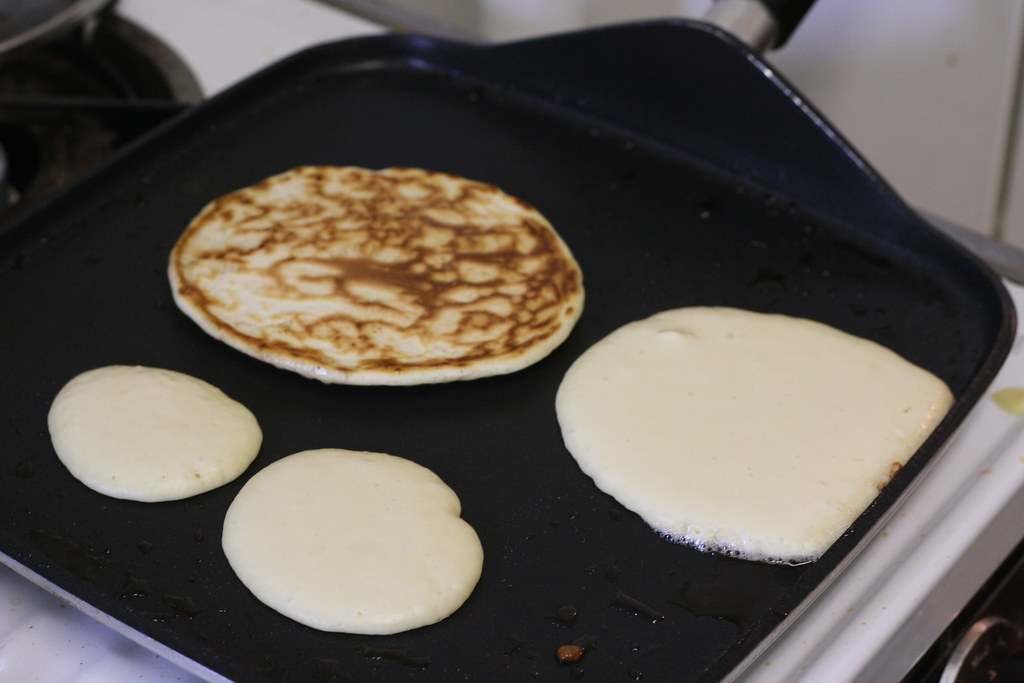
The batter is easy enough. But are pancakes so good that they're worth standing over a griddle for what feels like forever?
No, they're not.
Of course, there's another pancake recipe in How to Cook Everything, so I'm not going to get off that easy. Good news: this one is more involved!
Friday, April 16, 2010
Monday, April 12, 2010
New Favorites: Beer Glazed Beans
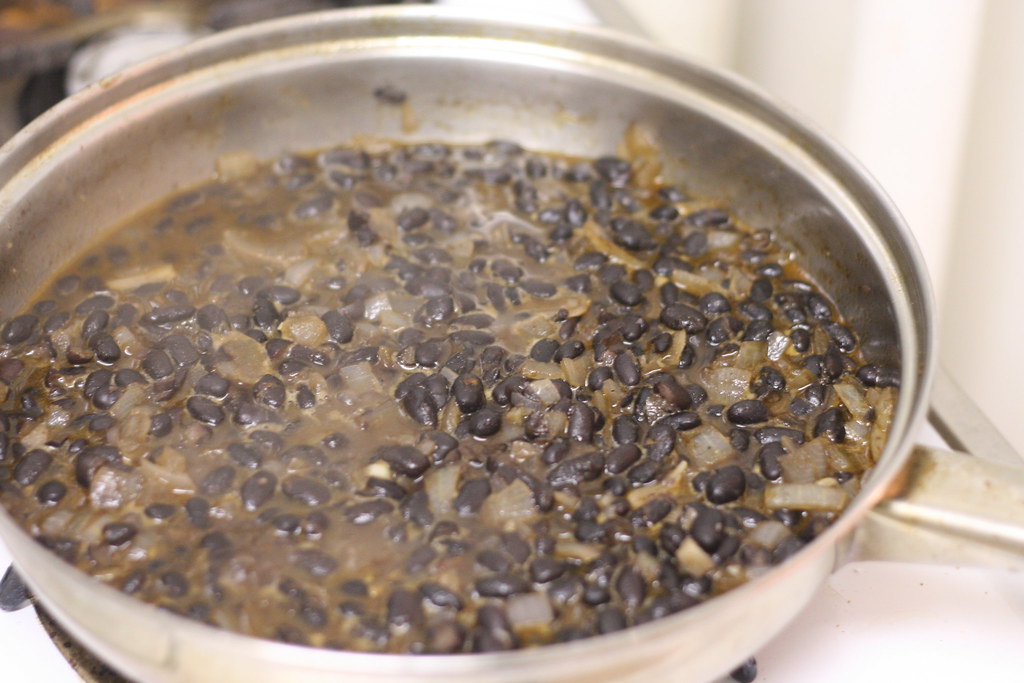
Okay, here is the best way I've seen (so far) to prepare black beans.
Cook some onion, add some garlic, then add everything else: black beans (cooked, or canned), some honey, salt, pepper and a cup of beer. You can also add some cayenne or hot sauce or chiles or whatever you like for heat. Bring it to a bubble and just let it cook until the sauce has thickened. That's it. The beer gives it real depth, the honey just a bit of sweetness. I want some right now.
Thursday, April 8, 2010
Doing It Right: Cold Brewed Coffee

It's warming up around here, so now is the perfect time to talk about iced coffee. I'm a big fan. I like my iced coffee strong. There's going to be ice melting in there, so it better be. Now, for years I just kept leftover coffee in a pitcher in the fridge. There's no shame in that. The only truly unacceptable way to make iced coffee is to pour hot coffee over ice. If you try to give me that shit, I am sending it back.
But in 2007 I read about New Orleans iced coffee, also known as cold brewed iced coffee, in T Magazine. T is the New York Times' quarterly-or-something glossy style mag. This marks the first and only case of T Magazine being useful in any way, to anyone, anywhere.
Anyway, cold brewed coffee is great for a few reasons, first and foremost being that it is delicious and refreshing in a way that no other brewing method can achieve. By steeping the grounds in cold water for at least 12 hours (longer is fine) and then straining through a paper towel (don't laugh, it works) or cheesecloth if you're fancy, the coffee acquires absolutely zero bitterness. Hot water hitting cool grinds is a big part of what makes traditional coffee bitter. By starting with cold water and cool grinds, you eliminate all the bitterness, and a fair amount of acidity as well.
What you end up with is sometimes called coffee concentrate. It's dark and inky, almost like a super smooth espresso. I like to drink it with an equal amount of milk and a ton of ice. Sometimes I add a bit of simple syrup, but it's not really necessary--this stuff has a sweetness of its own. I compare it to coffee ice cream. If you take your coffee black, dilute this stuff with some water. If you drink a whole cup of it you'll be vibrating for days. For more info, and the recipe, follow the link to the Times below. You'll probably never look back.
Iced Storm [t magazine]
(Photo from flickr user thebittenword)
Wednesday, April 7, 2010
Steak!: Pan-Grilled/Oven-Roasted Steak, Simple Pan Sauce, Braised Potatoes and Raw Beet Salad
I like steak alright, but it's not my absolute favorite thing in the world. Ambivalence combined with my own trepidation at trying to make it kept me from ever attempting to cook a steak myself. Turns out it's easy, and it'll make you look good! I mean, come on, steak is impressive. It just is. I don't know why, as it's super simple.
I was scared because there's not a ton of wiggle room with steak. It's just a piece of meat. You can't really mask any big fuck ups. But that's also what makes it fairly easy to make. It's just a piece of meat. There aren't a lot of places to fuck up, short of overcooking it, and even then, it's probably going to be edible. And as long as you're not cooking for a big jerk, shouldn't be a huge problem. It's a good litmus test, actually: feed someone an overcooked steak, see how they handle it.
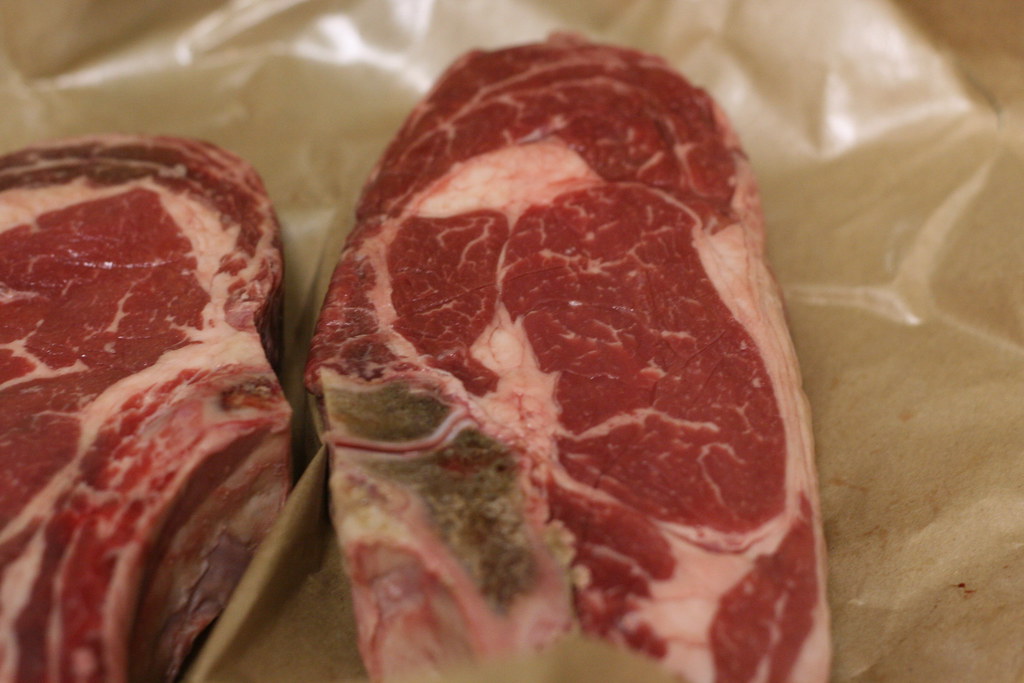
So, we turn to the first recipe in the Meat chapter of How to Cook Everything: Grilled, Pan-Grilled, or Broiled Steak, Many Ways. Many ways, indeed! I settled on the Pan-Grilled/Oven-Roasted Steak, "an excellent method if you don't have first-rate exhaust system or your steak is thicker than 1 1/2 inches." Mine were about 1 1/2 inches, rib steaks that were on sale at the store, and my exhaust system I would say is good-not-great.
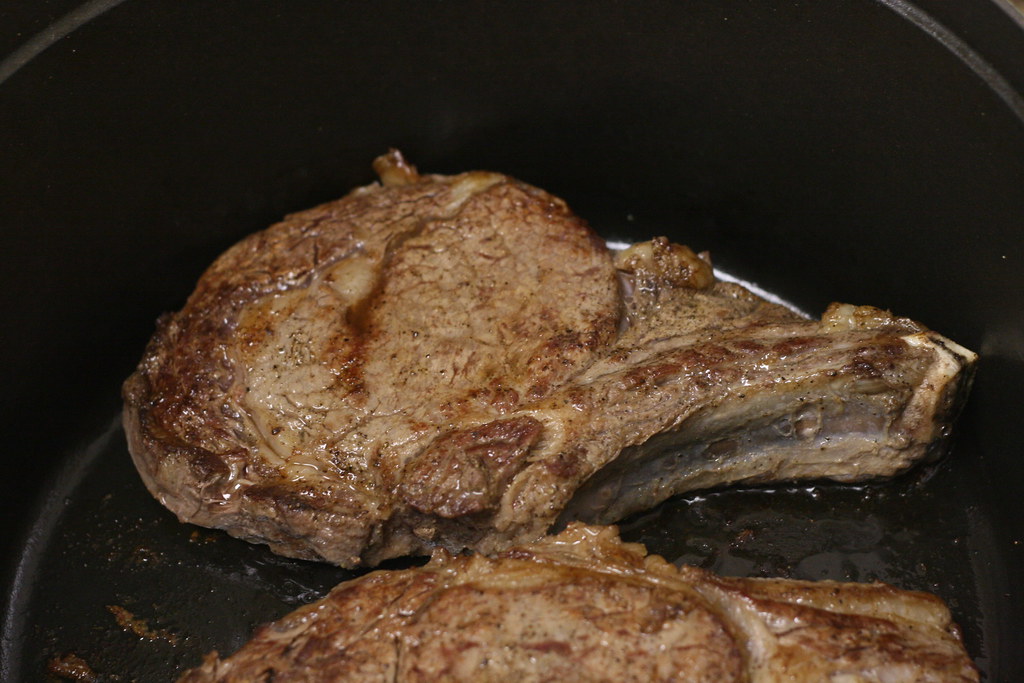
Basically you crank your oven up to 11 (at least 500 degrees), then heat a cast-iron skillet (I used my huge dutch oven, as it's the only cast-iron cookware I've got) until it's really hot. Sprinkle the bottom of the pan with some kosher salt and add the steaks. Then you immediately transfer this to the oven. Turn once, cooking until the steaks are done. That's really it; I don't know why I was so freaked out about all of this. Really it's one of the simplest things I've made, and that says a lot.
With the bits stuck to the bottom of the pan, I turned to another recipe I probably should have made by now: Simple Pan Sauce. Pour off some of the fat, and with the pan back on the heat, add some red wine and minced shallots, scraping the brown bits off the bottom of the pan until they're all free and floating around and most of the wine has evaporated. Then add some stock or water, turn off the heat, and add some butter, a little bit at a time. As much or as little as you like works here. I didn't use much and it was still delicious. Then just add a bit of lemon juice or vinegar (optional), and you're done. You can garnish with parsley but I was eating this with my brother, and he hates parsley.*
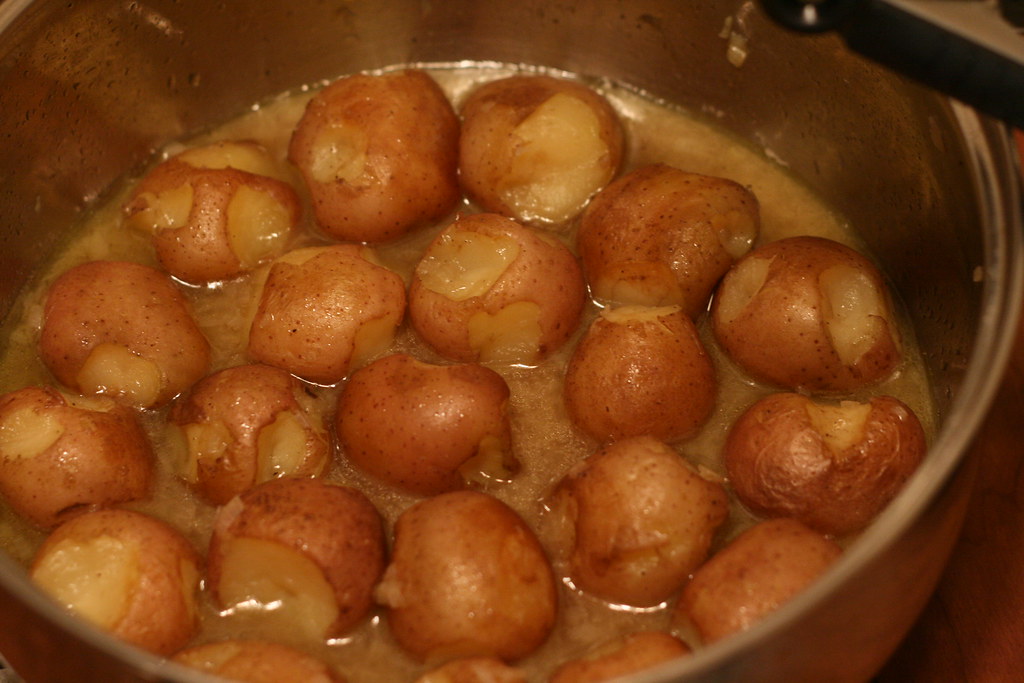
On the side, I made Braised Potatoes, which is basically just potatoes seared then cooked in stock with a bit of chopped onion and whatever other aromatics you like. The stock gives them a lot of flavor and they end up perfectly tender, soft enough to soak up some of that extra steak juice and pan sauce.
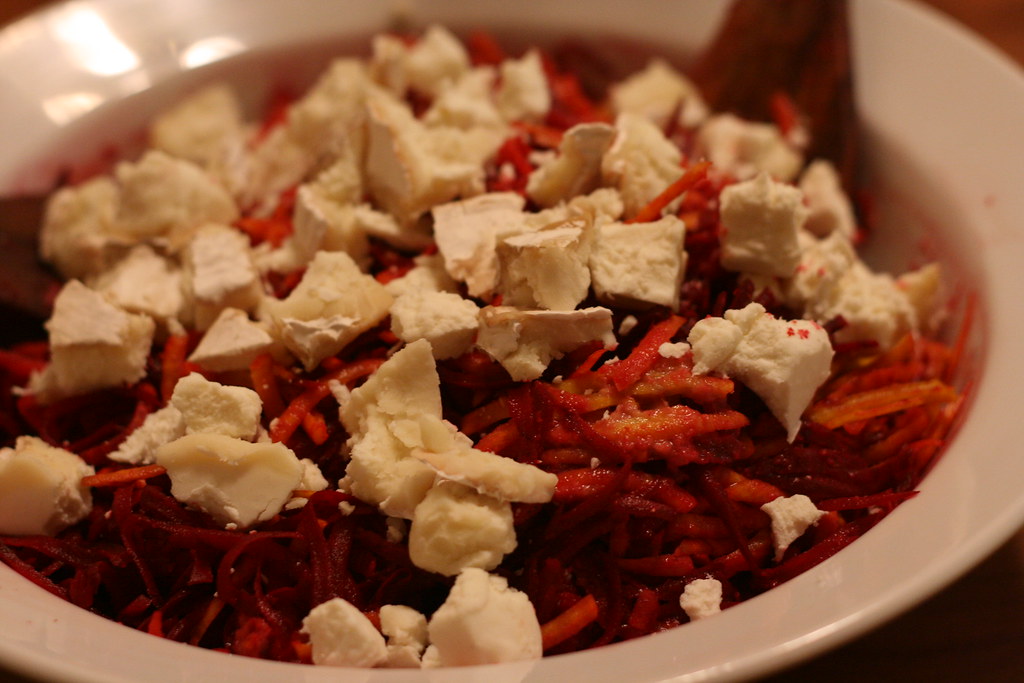
Finally, I made the Raw Beet Salad, where you grate beets (thanks food processor!) and toss them vinegar, mustard and a bit of olive oil. I topped it with some goat cheese, because goat cheese is delicious. I also added an arugula salad to the beet salad, because they go well together, pretty much. I would have made it all one glorious amalgam of a salad but arugula's not everyone's favorite. I know, I don't get it either.
And that was our steak dinner. It was freaking great.
*How can you hate something as inoffensive as parsley? Hell if i know.
I was scared because there's not a ton of wiggle room with steak. It's just a piece of meat. You can't really mask any big fuck ups. But that's also what makes it fairly easy to make. It's just a piece of meat. There aren't a lot of places to fuck up, short of overcooking it, and even then, it's probably going to be edible. And as long as you're not cooking for a big jerk, shouldn't be a huge problem. It's a good litmus test, actually: feed someone an overcooked steak, see how they handle it.
So, we turn to the first recipe in the Meat chapter of How to Cook Everything: Grilled, Pan-Grilled, or Broiled Steak, Many Ways. Many ways, indeed! I settled on the Pan-Grilled/Oven-Roasted Steak, "an excellent method if you don't have first-rate exhaust system or your steak is thicker than 1 1/2 inches." Mine were about 1 1/2 inches, rib steaks that were on sale at the store, and my exhaust system I would say is good-not-great.
Basically you crank your oven up to 11 (at least 500 degrees), then heat a cast-iron skillet (I used my huge dutch oven, as it's the only cast-iron cookware I've got) until it's really hot. Sprinkle the bottom of the pan with some kosher salt and add the steaks. Then you immediately transfer this to the oven. Turn once, cooking until the steaks are done. That's really it; I don't know why I was so freaked out about all of this. Really it's one of the simplest things I've made, and that says a lot.
With the bits stuck to the bottom of the pan, I turned to another recipe I probably should have made by now: Simple Pan Sauce. Pour off some of the fat, and with the pan back on the heat, add some red wine and minced shallots, scraping the brown bits off the bottom of the pan until they're all free and floating around and most of the wine has evaporated. Then add some stock or water, turn off the heat, and add some butter, a little bit at a time. As much or as little as you like works here. I didn't use much and it was still delicious. Then just add a bit of lemon juice or vinegar (optional), and you're done. You can garnish with parsley but I was eating this with my brother, and he hates parsley.*
On the side, I made Braised Potatoes, which is basically just potatoes seared then cooked in stock with a bit of chopped onion and whatever other aromatics you like. The stock gives them a lot of flavor and they end up perfectly tender, soft enough to soak up some of that extra steak juice and pan sauce.
Finally, I made the Raw Beet Salad, where you grate beets (thanks food processor!) and toss them vinegar, mustard and a bit of olive oil. I topped it with some goat cheese, because goat cheese is delicious. I also added an arugula salad to the beet salad, because they go well together, pretty much. I would have made it all one glorious amalgam of a salad but arugula's not everyone's favorite. I know, I don't get it either.
And that was our steak dinner. It was freaking great.
*How can you hate something as inoffensive as parsley? Hell if i know.
Tuesday, April 6, 2010
Bittman Speaks!
Grub Street pointed out this great video from Big Think, embedded below, featuring the man himself speaking on a number of food related issues. Some interesting tidbits in here. I like the reminder that it's very rare that you mess up a dish so badly that you can't enjoy it. Truth.
Meanwhile, I just got a Kindle and the second book I downloaded for it? That's right, How To Cook Everything, now ultra lightweight! (The first book? Street Gang, Michael Davis' in-depth history of the groundbreaking early days of Sesame Street)
If You Don't Like Bittman's Food, 'Something's Wrong' [grubstreet]
Meanwhile, I just got a Kindle and the second book I downloaded for it? That's right, How To Cook Everything, now ultra lightweight! (The first book? Street Gang, Michael Davis' in-depth history of the groundbreaking early days of Sesame Street)
If You Don't Like Bittman's Food, 'Something's Wrong' [grubstreet]
Thursday, April 1, 2010
Minimalistist: Stir-Fried Pork with Spinach
The longer, more involved recipes in How to Cook Everything are great. But it really excels in the fast and dirty recipes that Bittman has been dispensing in the Times' Minimalist column for years now. This is one such recipe, so fast and simple, utterly delicious, and endlessly adaptable that you wonder why anyone would ever spend more than an hour or so in the kitchen.
The trick with this recipe is to get all your prep work done beforehand; it only takes ten minutes once you get your pan hot. So, take some pork shoulder, slice it into bite size pieces as thin as you can get them (freezing for 30 minutes will be a huge help here), then wash the spinach (or whatever leafy green you want) and tear it up a bit.
Okay, oil in the pan, get it really hot, cook the pork 'til it's just cooked through, then get it out of there. Throw in the garlic, let it get some color for a mintue, then add all the spinach. Lots of spinach. It cooks down like nobody's business. When it is cooked down, throw the pork back in, along with some lime juice and soy sauce. Add scallions (lots of scallions). That's it! I'm sure you can do this with any kind of meat, or any kind of veg thrown in, but the pork/spinach combo seems to work really well.
The trick with this recipe is to get all your prep work done beforehand; it only takes ten minutes once you get your pan hot. So, take some pork shoulder, slice it into bite size pieces as thin as you can get them (freezing for 30 minutes will be a huge help here), then wash the spinach (or whatever leafy green you want) and tear it up a bit.
Okay, oil in the pan, get it really hot, cook the pork 'til it's just cooked through, then get it out of there. Throw in the garlic, let it get some color for a mintue, then add all the spinach. Lots of spinach. It cooks down like nobody's business. When it is cooked down, throw the pork back in, along with some lime juice and soy sauce. Add scallions (lots of scallions). That's it! I'm sure you can do this with any kind of meat, or any kind of veg thrown in, but the pork/spinach combo seems to work really well.
Monday, March 15, 2010
Things I've Actually Baked: Scones
Scones, it turns out, are not the hardest thing in the world to make. Bittman says you can mix the batter in the food processor, so that's exactly what I did.
For some reason, my batter ended up incredibly runny when I plopped it onto the counter out of the food processor, so I added some more flour to the mixture before kneading it ("10 times; no more"). I also forgot to add the dried currants, which would have been a nice touch. Oh well. Bittman says to cut circles out of the dough after rolling it out to 3/4 inches, but I decided to just roll it into a square and cut amorphous triangle things off of that. They didn't look great, but they tasted fine and cooked evenly. These were really good for plain scones, but next time I'd definitely use the currants, or anything else Bittman suggests in the adjacent list, "13 Additions to Virtually Any Quick Bread, Muffins, Biscuits or Scones." He's always got you covered.
The best part of the scones recipe is, you can do it all way ahead of time. Deb at Smitten Kitchen even says in her scone recipe that she rolls and cuts them out, freezes the dough, then throws them in the oven the morning of brunch to save time.
For some reason, my batter ended up incredibly runny when I plopped it onto the counter out of the food processor, so I added some more flour to the mixture before kneading it ("10 times; no more"). I also forgot to add the dried currants, which would have been a nice touch. Oh well. Bittman says to cut circles out of the dough after rolling it out to 3/4 inches, but I decided to just roll it into a square and cut amorphous triangle things off of that. They didn't look great, but they tasted fine and cooked evenly. These were really good for plain scones, but next time I'd definitely use the currants, or anything else Bittman suggests in the adjacent list, "13 Additions to Virtually Any Quick Bread, Muffins, Biscuits or Scones." He's always got you covered.
The best part of the scones recipe is, you can do it all way ahead of time. Deb at Smitten Kitchen even says in her scone recipe that she rolls and cuts them out, freezes the dough, then throws them in the oven the morning of brunch to save time.
Subscribe to:
Posts (Atom)